Unleash the Fire Ants: A Deep Dive into Their World
Discover the fascinating world of fire ants and uncover the secrets of their behavior, habitat, and impact on the environment.

The Rise of Fire Ants: A Brief History
Fire ants, also known as Solenopsis invicta, are an invasive species that originated in South America. They were accidentally introduced to the United States in the early 20th century, likely through cargo shipments. Since then, they have spread rapidly throughout the southern states, becoming a common sight in many areas.
The rise of fire ants can be attributed to their ability to adapt and thrive in various environments. They are highly resilient and can survive in both wet and dry conditions. This adaptability, coupled with their aggressive behavior, has allowed them to outcompete native ant species and establish large colonies.
In recent years, the population of fire ants has continued to grow, posing a significant threat to ecosystems and human activities. Understanding their history is crucial in developing effective strategies for controlling their populations.
Fire Ant Identification and Characteristics
Fire ants are small reddish-brown ants that measure between 1/8 to 1/4 inch in length. They can be easily identified by their aggressive behavior and painful sting. When disturbed, fire ants will quickly swarm and attack, delivering multiple painful stings to their victims.
One unique characteristic of fire ants is their ability to form large colonies, with populations ranging from a few thousand to several hundred thousand ants. These colonies consist of different types of ants, including workers, drones, and a queen. The queen is responsible for reproducing and maintaining the colony.
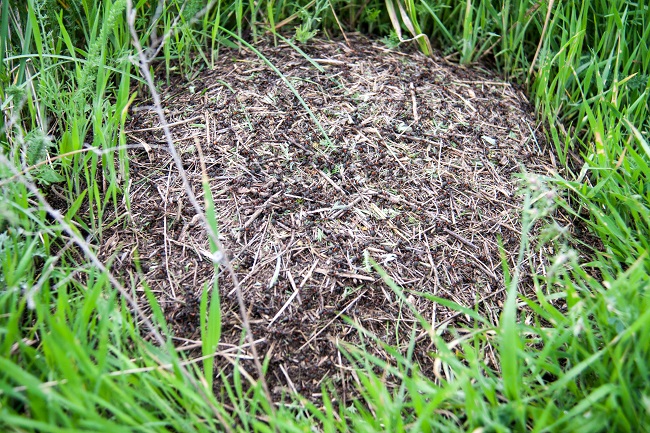
Fire ants are highly adaptable and have been known to build nests in a wide range of environments, including lawns, gardens, and even electrical equipment. Their nests are typically mound-shaped and can reach heights of up to 18 inches.
It’s important to be able to identify fire ants to effectively deal with infestations and minimize their impact on the environment.
The Social Structure of Fire Ant Colonies
Fire ant colonies have a complex social structure that revolves around the queen. The queen is the largest ant in the colony and is responsible for laying eggs. She can produce thousands of eggs each day, ensuring the survival and growth of the colony.
Worker ants make up the majority of the colony and are responsible for tasks such as foraging, building and maintaining the nest, and caring for the queen’s offspring. They are sterile females and do not reproduce.
Male ants, known as drones, are responsible for mating with the queen and ensuring the genetic diversity of the colony. They have wings and are capable of flight, unlike worker ants.
The social structure of fire ant colonies is highly organized and efficient, allowing them to rapidly expand their populations and dominate their surroundings. Understanding their social dynamics is essential in developing effective control strategies.
Fire Ants: A Formidable Predator
Fire ants are not only a nuisance to humans but also pose a significant threat to native wildlife. They are aggressive predators, feeding on a wide range of small animals, including insects, spiders, and small vertebrates. Their venomous sting immobilizes their prey, making it easier for them to subdue and consume.
The impact of fire ants on ecosystems can be devastating. They can outcompete native ant species for food and resources, disrupt the balance of local ecosystems, and even endanger native wildlife. In some cases, fire ants have been known to kill small animals, including birds and reptiles.
Controlling fire ant populations is crucial in preserving the biodiversity and ecological balance of an area. Effective strategies must be implemented to minimize their impact and protect native species.
Controlling Fire Ant Populations: Strategies and Challenges
Controlling fire ant populations can be a challenging task due to their rapid reproductive rate and ability to adapt to various control methods. However, there are several strategies that can be employed to manage and reduce their numbers.
One common method is the use of bait treatments, which involve applying insecticides to attract worker ants. The workers then carry the bait back to the colony, where it is consumed by the queen and other ants, effectively eliminating the entire colony. This method can be effective but requires careful application and monitoring.
Another approach is the use of mound treatments, where insecticides are directly applied to individual mounds. This method targets specific colonies and can be useful for localized infestations.
Biological control methods, such as the introduction of natural predators or parasites, have also been explored. However, these methods can have unintended consequences and must be carefully evaluated before implementation.
In conclusion, fire ants are a formidable invasive species that have established a strong presence in many areas. Understanding their behavior, characteristics, and impact is crucial in developing effective strategies for controlling their populations and minimizing their ecological and economic damage.