How to Protect Your Home From Wasps and Hornets This Summer: What Homeowners Need to Know
Effective Wasp and Hornet Prevention Tips for a Safer Summer
Summer in North Dallas means longer days, backyard barbecues, pool parties, and more time spent outdoors. Unfortunately, it also marks the peak season for wasps and hornets. These stinging insects become increasingly active as temperatures rise, often building nests around homes, patios, decks, and outdoor living spaces. While a single wasp may seem harmless, large colonies can create serious safety concerns for families, pets, and guests.
At AJB Pest, we help homeowners throughout North Dallas identify, prevent, and eliminate wasp and hornet problems before they become dangerous. Our experienced team understands the unique pest pressures that come with Texas summers and provides customized pest control services designed to protect your property year-round. We are committed to delivering reliable solutions, exceptional customer care, and long-lasting results that give homeowners peace of mind. Whether you have noticed increased wasp activity around your home or want to take preventative measures before summer reaches its peak, understanding how these pests behave is the first step toward protecting your family and property.
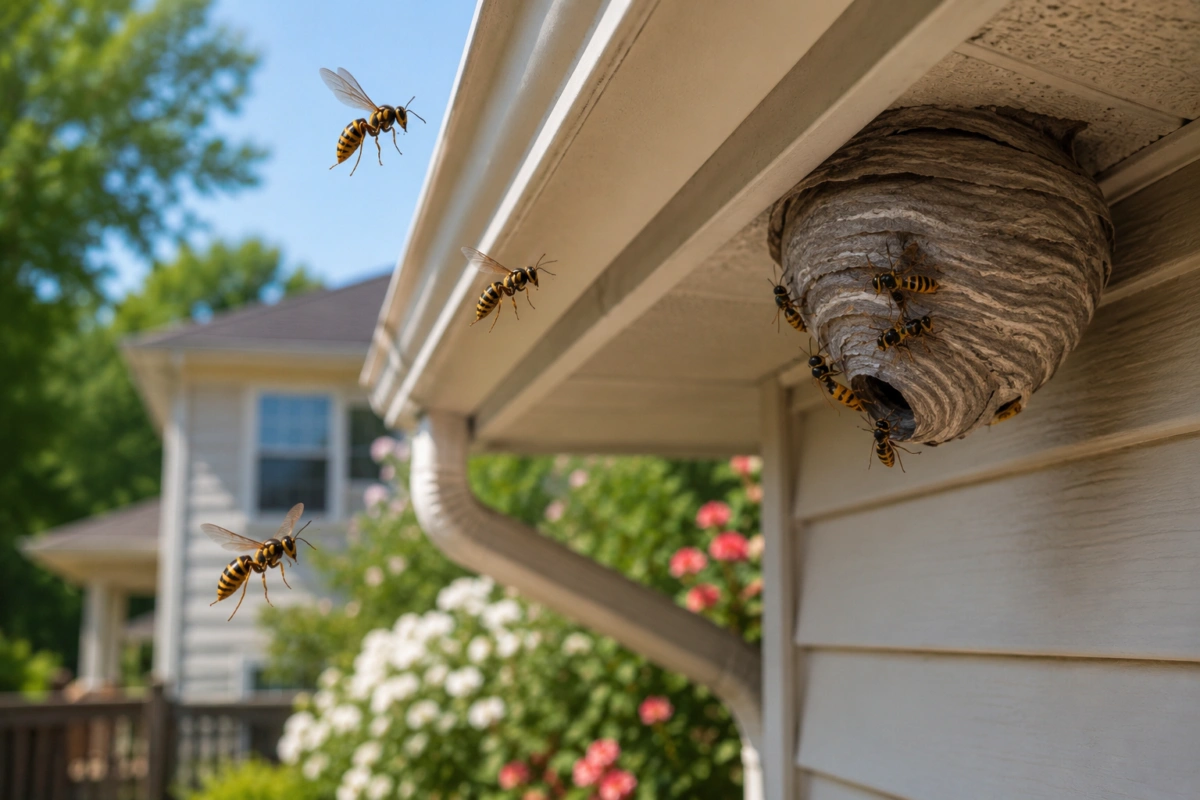
Why Wasps and Hornets Become More Active During Summer
Wasps and hornets are most active during the warmer months because their colonies are rapidly growing. In spring, queens emerge from overwintering sites and begin building nests. By mid to late summer, those nests can contain hundreds or even thousands of insects.
North Dallas experiences long periods of warm weather, creating ideal conditions for colony expansion. As food demands increase, wasps and hornets become more aggressive while searching for protein and sugary substances. This is why homeowners often notice increased activity around outdoor dining areas, garbage bins, gardens, and swimming pools.
Some of the most common stinging insects found in North Texas include:
- Paper wasps
- Yellow jackets
- Bald-faced hornets
- Mud daubers
While not all species are highly aggressive, any nest located near frequently used areas can pose a risk.
Common Places Wasps and Hornets Build Nests
One of the best ways to protect your home from wasps and hornets is by identifying potential nesting sites before colonies become established.
Common nesting locations include:
- Roof eaves
- Attics
- Porch ceilings
- Deck railings
- Sheds and garages
- Trees and shrubs
- Fence posts
- Outdoor play equipment
Many homeowners do not notice a developing nest until it has grown significantly. Regular inspections of your property’s exterior can help identify problems early when they are easier and safer to address.
Pay special attention to areas that provide shelter from wind, rain, and direct sunlight. Wasps often prefer protected locations that are rarely disturbed.
Signs You May Have a Wasp or Hornet Problem
Early detection can help prevent larger infestations and reduce the likelihood of painful stings.
Watch for these warning signs:
- Increased wasp activity around your home
- Visible nests attached to structures
- Insects entering and exiting the same area repeatedly
- Buzzing sounds coming from walls, soffits, or attics
- Large numbers of insects gathering near food sources
If you notice several wasps flying around a specific location daily, there is a strong possibility that a nest is nearby.
Many homeowners mistakenly assume that a few insects are not cause for concern. However, colonies can grow rapidly during the summer months, making early intervention especially important.
How to Reduce Wasp and Hornet Activity Around Your Property
While professional pest control is often the most effective solution, there are several preventative steps homeowners can take to make their property less attractive to stinging insects.
Eliminate Food Sources
Wasps are attracted to sweet foods, sugary drinks, and protein-rich leftovers. During outdoor gatherings:
- Keep food covered when possible
- Clean spills immediately
- Use tightly sealed trash containers
- Remove pet food after feeding
Reducing access to food can significantly decrease wasp activity around patios and outdoor entertainment areas.
Seal Entry Points
Some species may enter wall voids, attics, and other structural spaces.
Inspect your home for:
- Cracks around windows and doors
- Gaps in siding
- Damaged screens
- Open utility penetrations
Sealing these openings can help prevent insects from establishing nests in hard-to-reach areas.
Maintain Landscaping
Overgrown vegetation provides shelter for many pests, including wasps and hornets.
Regularly:
- Trim shrubs and bushes
- Remove fallen branches
- Prune trees away from structures
- Keep grass properly maintained
Well-maintained landscaping reduces potential nesting opportunities around your home.
Remove Standing Water
Although wasps are not as dependent on water as mosquitoes, they still require moisture for survival.
Check for:
- Leaking outdoor faucets
- Standing water in containers
- Poor drainage areas
- Birdbaths that need cleaning
Reducing available water sources can make your property less appealing.
Why DIY Wasp Removal Can Be Dangerous
Many homeowners attempt to remove nests themselves using store-bought sprays or improvised methods. Unfortunately, DIY removal often leads to stings and incomplete nest elimination.
Wasps and hornets become highly defensive when they perceive a threat to their colony. Disturbing a nest can trigger aggressive behavior from dozens or even hundreds of insects simultaneously.
Individuals with allergies face an even greater risk. According to the American College of Allergy, Asthma & Immunology, insect stings can cause severe allergic reactions that require immediate medical attention.
Professional pest control technicians have the equipment, training, and treatment methods needed to safely remove nests while minimizing risks to homeowners and their families.
The Benefits of Professional Wasp and Hornet Control
Professional pest control offers more than simply removing visible nests.
A comprehensive treatment plan can help:
- Identify hidden nesting sites
- Eliminate active colonies
- Reduce future nesting opportunities
- Monitor ongoing activity
- Protect outdoor living spaces
At AJB Pest, our team understands the seasonal pest challenges homeowners face throughout North Dallas. We take a proactive approach to pest management, helping customers address current infestations while reducing the likelihood of future problems.
Our customized pest control services are designed to protect your family, pets, and property while allowing you to enjoy your outdoor spaces with confidence.
Enjoy a Safer Summer Without Stinging Pests
Wasps and hornets are a common part of summer in North Texas, but they do not have to take over your property. With regular inspections, preventative maintenance, and professional pest control services, homeowners can significantly reduce the risk of dangerous nests and unwanted encounters.
If you have noticed increased wasp activity around your home or want to proactively protect your property this summer, AJB Pest is here to help. Our experienced team provides trusted pest control services designed to keep your home comfortable, safe, and protected all season long.
Ready to protect your home from wasps and hornets this summer? Contact us today to schedule an inspection and learn more about our customized pest control solutions. Keywords naturally incorporated include pest control, pest control services, exterminator, home pest control, and pest control company.